Here's How Vets Can Use Both Post- 9/11 and Montgomery GI Benefits

ADVERTISEMENT
Understanding your education benefits is a critical step for a successful military-to-civilian transition. For years, service members were told they had to make a choice, pick between the Post-9/11 GI Bill (Chapter 33) or the Montgomery GI Bill (Chapter 30), often leaving money and months of eligibility on the table.
However, recent landmark legal shifts, specifically the Rudisill and Perkins v. Collins rulings, have rewritten the rules of the game. Whether you are looking to complete a degree, earn professional certifications, or pivot career fields, knowing how these two GI Bills align and where they differ is the first step to getting the most out of your benefits.
Montgomery GI Bill vs. Post-911: Let’s Compare
For service members looking to receive higher education, the Post-9/11 and Montgomery GI Bills represent two different but equally important paths toward career growth. While they differ in how they distribute funds, both programs offer 36 months of education benefits that can be applied to more than just a traditional four-year degree.
Whether you are aiming for a master’s degree, pursuing a vocational trade, or earning any certification, both bills provide the financial help to cover accredited training and licensing exams.
Military Benefits Eligibility Checker
Answer a few questions to discover which military and VA benefits you or your family may be eligible for.
10 questions • Takes about 2 minutes
Both benefits have administrative similarities that help with the transition process. You can apply for either via the same VA Form 22-1990, and both allow for a delimiting date that gives you a window of time to use your entitlement after leaving the service.
While the Post-9/11 GI Bill is often the go-to for its housing allowance, the Montgomery GI Bill is a powerful benefit for those who want a direct monthly payment to pay their own educational expenses. Ultimately, both programs are here to turn your military experience into a civilian career you’re passionate about.


Nobody Prepared You for Military Life
But we can help. Join over 100k spouses already getting the advice, resources, and military tea they need to thrive.
How Do the Montgomery and Post 9/11 GI Bills Work?
While both programs offer education benefits for degrees and certifications, they distribute funds differently. The Post-9/11 GI Bill operates as a "full-ride" system, where the VA pays tuition to the school and provides you with housing allowance. For the 2025-2026 academic year, the private school cap is $29,920.95, rising to $30,908.34 for 2026-2027. This is the safest option for high-cost areas where housing stipends can go up to $4,000. You can view the current Post-911 GI Bill (Chapter 33) Rates to see how much your specific location is impacted.
On the other hand, the Montgomery GI Bill pays a flat monthly rate to students. The current 2025-2026 full-time rate is $2,518.00 per month. You pay your own tuition and housing, but keep whatever is left over. This is usually the better choice for online students, as the current Post-9/11 online rate is $1,169.00. To track these monthly payouts, visit the Montgomery GI Bill (Chapter 30) Rates page.
Outside the immediate payouts, the two bills differ significantly in their lifespan. The Forever GI Bill Act states that Post-9/11 GI Bill benefits never expire for those who left service after January 1, 2013, while the Montgomery GI Bill carries a strict 10-year expiration date.
Moreover, the Post-9/11 GI Bill offers the Yellow Ribbon Program to help with expensive private schools, which does not exist under the Montgomery GI Bill.
Finally, there is your initial investment. If you used all 36 months of your Post-9/11 benefits, the VA will actually refund the $1,200 buy-in that many service members paid into the MGIB during their first year of service.

Recent Supreme Court Ruling Gives Veterans Access to Both Benefits
The Rudisill and Perkins rulings ended the requirement for Veterans to waive their Montgomery GI Bill to access Post-9/11 benefits. This change potentially grants you up to 48 months of total benefits.
While the Supreme Court's Rudisill case helped Veterans with separate enlistments, the Court of Appeals for Veterans Claims ruling in Perkins v. Collins specifically helps those with a single, long period of service.
The court decided that if your period of service satisfies the requirements for both programs independently, without double-counting the same days, you are entitled to both. This allows you to use 36 months of one bill and an additional 12 months of the other.
What This Means for You Right Now
The VA has started active automation for these updates. They are currently reviewing over 1 million Veteran files proactively, so most Veterans don’t need to formally request a review.
Currently, priority is reserved for those with less than three months of benefits remaining who are actively enrolled in school. To stay informed on the latest status of these automated updates, check the Official VA Rudisill and Perkins Update Page.
To get the most out of these updates, use the VA GI Bill Comparison Tool, which allows you to check housing rates in your ZIP code, and the VA.gov Education Portal, where you can check your remaining months. By staying up to date and using these benefits, you can secure 48 months of support to turn your military experience into a long-term career that you love.
Continue Reading

Can You Use the GI Bill for Grad School? Here’s What to Know
Veteran Benefits
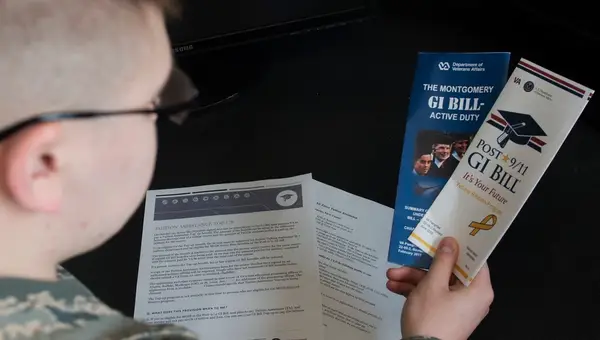
More Than 1 Million Veterans May Qualify for Additional GI Bill Benefits After Supreme Court Ruling
Veteran Benefits

GI Bill Updates: New Protections for Veterans in Higher Education
Veteran Benefits
Join the Conversation

BY MICHAEL MADRID
Military News & Gear Specialist at MilSpouses
BY MICHAEL MADRID
Military News & Gear Specialist at MilSpouses
Michael Madrid is a dedicated writer whose reporting brings clarity and authenticity to the stories of military members and their families. Having grown up in the shadow of Fort Bliss as the son of a Marine and grandson of Veterans, he po...
ADVERTISEMENT



ADVERTISEMENT