Aviators Lose Path to Amphibious Command in Sudden Navy Policy Shift
COMMENT
SHARE

ADVERTISEMENT
The Navy is moving to reshape who commands its amphibious warships, and it’s happening without a formal plan in place.
A signed April 24 memo from Chief of Naval Operations, Daryl Caudle (CNO), outlines a direction that would move away from assigning aviators to command amphibious ships and toward relying exclusively on Surface Warfare Officers for those roles. Specifying that the change applies directly to amphibious assault ships, transport docks, and dock landing ships, the memo has circulated internally but has not been released through official public channels, and no NAVADMIN has been issued to define how or when any change would be carried out.
The CNO gave the Navy 60 days to establish the fleet-wide policy. The ground effect is already showing up as Aviation officers in the command pipeline for Amphibious warships are pressed to adjust their career expectations in real time.
Why This Shift Is Surfacing Now
The memo reflects a problem the Navy has been working to fix for years. Amphibious ship readiness has not consistently matched the operational demand placed on it.
Maintenance delays, extended yard periods, and compressed training cycles have created a pattern that tends to surface late, usually when deployment timelines tighten. When one ship slips, another picks up the mission. That can be absorbed once, but it becomes harder when it repeats across the fleet.
Leadership is now putting more weight on experience that comes from running ships over time. Surface Warfare Officers build careers around engineering systems, maintenance planning, and the material condition of ships.
That background is being treated less as a preference and more as a requirement to maintain the standard of readiness and performance. Highlighting the shift toward SWO-centric expertise, Caudle wrote:
“Inherent in these improvements is the need for [commanding officers] to not only have exquisite knowledge of readiness, maintenance procedures, component design, and failure modes, damage control, and operational procedures, but also to be masters of their ships while remaining in command long enough to make real and effective changes.”
Caudle added that being a true master of the ship requires a command tour of “at least two years.” Historically, 6-8 aviators per year were selected to command large-deck amphibious ships, and were seen as a natural fit because of their aviation mission. Under this new directive, the lack of underlying engineering expertise is exactly what is pushing them out.

Nobody Prepared You for Military Life
But we can help. Join over 100k spouses already getting the advice, resources, and military tea they need to thrive.
Why Amphibious Ships Are Getting This Level of Attention
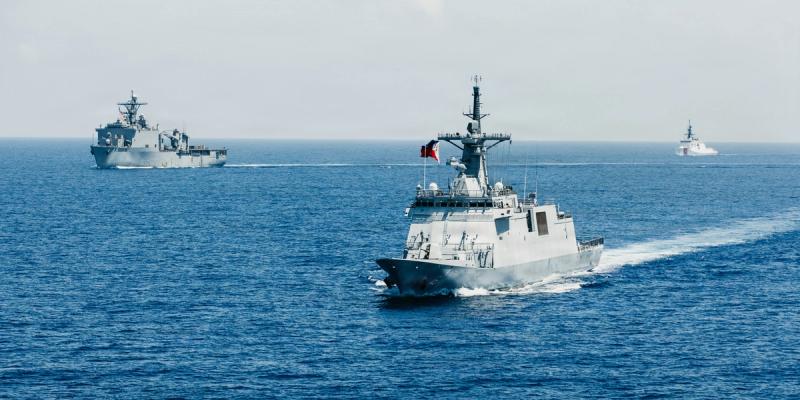
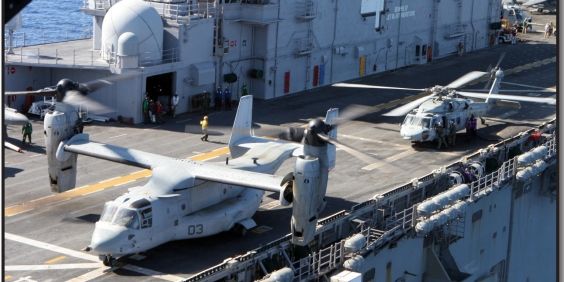
Amphibious ships are often the first credible option when something breaks overseas, and are widely considered the most versatile option in the DoD’s arsenal. They carry Marine Expeditionary Units (MEUs) that can deploy quickly, operate without host-nation support, and give commanders options when access is limited.
They are ready when called, and are often the first call. While the demand for MEUs has remained high, their availability has not. When one of these ships falls behind schedule, the impact spreads quickly. Deployment windows shift, time for training compresses, and days at home become harder to predict.
Which Military Branch Is Right for You?
Answer 10 questions to discover which branch of the U.S. Armed Forces best matches your personality, interests, and goals.
10 questions • Takes about 2 minutes
The part people may not be saying out loud yet is that when readiness slips, it doesn’t stay a maintenance issue; it becomes a leadership crisis, and avoiding that is where this memo is aimed.
What This Means For Aviators
While Caudle’s memo notes that aviators are still authorized to command aircraft carriers, Expeditionary Sea Bases, amphibious command ships, and submarine tenders, amphibious command has long been one of the primary pathways to major command outside the carrier structure. If that door closes, the competition for what remains tightens up quickly.
There is also a longer-term consequence that is harder to see at first. Command experience shapes follow-on assignments, retirement positioning, and post-service opportunities. Losing access to that track doesn’t just change a job; it changes the entire career trajectory.
What Is Still Not Defined
The memo doesn’t describe what happens to officers already selected or currently in training for amphibious command. That is where most of the tension is right now.
In past policy shifts, the Navy has sometimes allowed officers already screened to continue under existing rules. Whether that will apply here has not been formally stated.
Future command screening boards could begin to reflect the direction outlined in the memo, but that expectation has not yet been formalized. Right now, officers are making decisions without knowing exactly where the line will land.
ADVERTISEMENT
What This Signals About Navy Priorities
This move reflects something that has been building across the fleet for some time. Readiness is no longer treated as a supporting function. It is being treated as the condition that determines whether operations happen at all.
Adm. Caudle has consistently emphasized maintenance performance, material condition, and deployability. The direction outlined in the memo aligns with that focus. There is a recalibration underway in how command is assigned. Experience tied directly to ship performance is carrying more weight than flexibility across communities.
The Navy has not finalized the details of this plan, but the signal is already out, and word is moving faster than the paperwork. Amphibious ships are too central to current operations to absorb inconsistent readiness, and that changeup is already reshaping careers before the policy is fully written.
Continue Reading

The First 30 Days of a PCS Are the Hardest: Why They Still Break Down at the Start
PCS Advice

The Career Cost of Military Life: Why Military Spouse Unemployment Still Isn’t Fixed
Career & Pay

Milspouses Qualify for More VA Benefits Than Many Realize: Here’s What You Might Be Missing
Health & Fitness
Join the Conversation

BY NATALIE OLIVERIO
Veteran & Senior Contributor, Military News at MilSpouses
Natalie Oliverio is a Navy Veteran, journalist, and entrepreneur whose reporting brings clarity, compassion, and credibility to stories that matter most to military families. With more than 100 published articles, she has become a trusted v...
- Navy Veteran
- 100+ published articles
- Veterati Mentor
ADVERTISEMENT



ADVERTISEMENT
